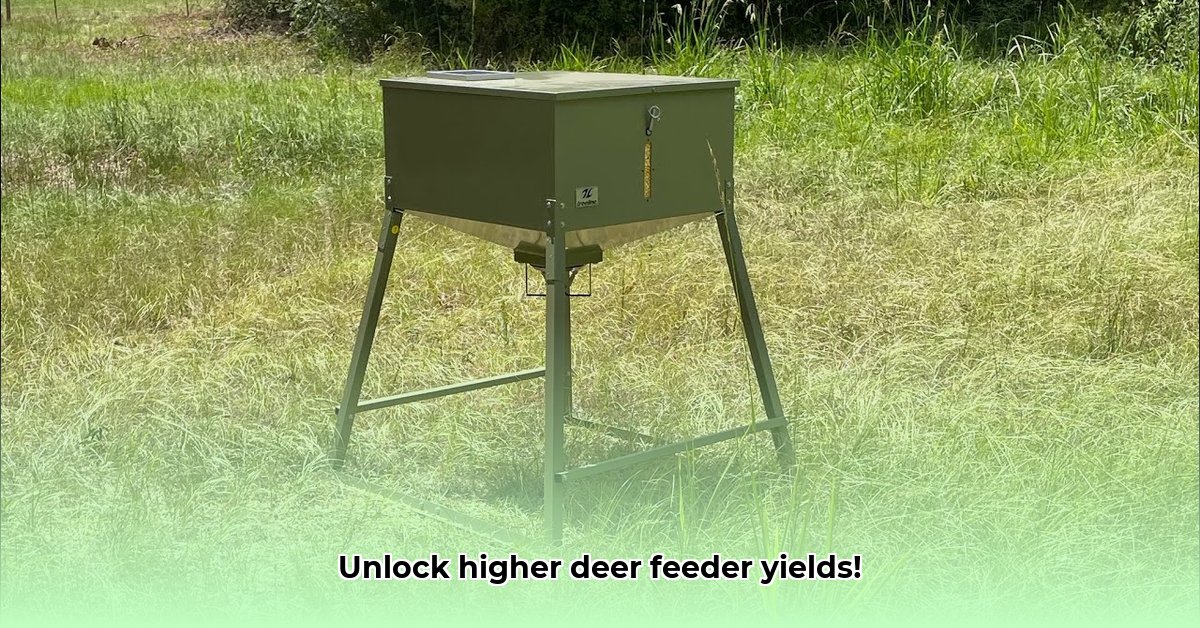
Deer Feeder Tractor Supply: A Guide to Sustainable Wildlife Management on Your Farm
Integrating deer feeders into your sustainable farming practices requires careful planning and execution. This guide, using Tractor Supply products as an example, details how to optimize deer feeders for both deer health and farm productivity. Done correctly, deer feeding can enhance biodiversity and potentially increase your farm's profitability. Incorrect implementation, however, can lead to unintended consequences, such as wasted resources and ecological disruption. For more farm equipment options, check out Tractor Supply's website.
Selecting the Perfect Deer Feeder: Balancing Features and Needs
Choosing the right deer feeder from Tractor Supply involves a multifaceted approach. Different feeder types offer unique advantages and disadvantages, directly impacting your wildlife management strategy and its sustainability.
Feeder Type: Tractor Supply offers several options. Gravity feeders are simple and inexpensive, ideal for smaller herds; however, they are prone to spoilage. Spin feeders offer better feed control, minimizing waste and reducing the attraction of unwanted animals, making them a more sustainable choice in many contexts. Platform feeders are best for larger herds but offer less control over feeding rates and might attract a wider range of animals. The optimal choice depends on your specific circumstances and management goals.
Capacity & Feeding Rate: Overfeeding is counterproductive. It wastes resources and can disrupt the natural ecosystem. Estimate your deer population and select a feeder with a capacity and feeding rate sufficient to meet their nutritional needs without excess. Regular monitoring and adjustment are crucial for sustainable feeding practices. Don't forget to consider the expected seasonal variations in deer population and their food requirements.
Durability & Weather Resistance: Investing in a durable, weather-resistant feeder constructed from robust materials like heavy-gauge steel or high-quality plastics is crucial for long-term cost-effectiveness. A feeder that withstands harsh weather conditions minimizes replacement costs and extends the lifespan of your investment.
Cost-Effectiveness & Maintenance: Consider the total cost of ownership. Factor in not only the initial purchase price but also potential repair costs, replacement parts, and the time and resources dedicated to regular cleaning and maintenance. A slightly more expensive, low-maintenance feeder can offer superior long-term value.
Table 1: Comparison of Popular Feeder Types
| Feeder Type | Pros | Cons |
|---|---|---|
| Gravity Feeder | Simple, inexpensive, easy to maintain, low initial cost | Prone to spoilage, inconsistent feeding, limited capacity for large herds |
| Spin Feeder | Precise feeding, minimizes waste, efficient feed use | More complex, potentially more expensive initially, requires more maintenance |
| Platform Feeder | High capacity, easy to fill, can accommodate larger herds | Less control over feeding, potentially attracts unwanted animals |
Strategic Placement: Maximizing Benefits, Minimizing Drawbacks
Feeder placement significantly impacts the success and sustainability of your wildlife management strategy. Strategic positioning helps maximize benefits while minimizing negative impacts on your farm and the environment.
Habitat Considerations: Avoid placing feeders near sensitive habitats, water sources, or areas with significant plant diversity to preserve these ecosystems.
Crop Protection: Use feeders to direct deer away from your crops by strategically placing them in designated areas relatively far away from crops, encouraging deer to feed there instead.
Disease Prevention: Regular cleaning and disinfection of the feeder are crucial to prevent disease transmission among deer. Removing spoiled feed and potential contaminants minimizes the risk of disease outbreaks.
Monitoring and Adjustment: Continuously observe deer activity around the feeder. Adjust the feeding rate and schedule based on your observations to optimize feeder efficiency and avoid waste. Adaptive management strategies enhance long-term sustainability.
Choosing the Right Feed: Nutrition and Sustainability
Selecting the appropriate feed is as vital as the feeder's design and placement. The type of feed directly impacts both the health of the deer and the overall sustainability of your program.
Nutritional Content: Choose a feed formulated to meet the nutritional requirements of white-tailed deer, ensuring they receive essential vitamins and minerals. Avoid overfeeding, which can lead to obesity and health problems in deer and waste of valuable resources.
Sustainable Sourcing: Prioritize locally sourced or organically produced feed whenever possible to reduce your environmental footprint and support local agriculture.
Waste Minimization: Select a feeder that minimizes feed spillage and waste. Dispose of leftover feed responsibly to prevent soil and water contamination.
Legal and Ethical Considerations: Responsible Wildlife Management
Before initiating a deer feeding program, fully understand and comply with all local regulations and guidelines governing deer feeding and hunting practices. Responsible behavior includes adhering to hunting seasons, bag limits, and respecting wildlife. Sustainable wildlife management demands responsible stewardship and adherence to all relevant laws.
Hypothetical Case Studies: Illustrating Best Practices
Consider two farms, both employing deer feeders. Farm A carefully plans feeder placement, feed selection, and conducts regular monitoring, adapting strategies based on observations. Farm B takes a haphazard approach. Clearly, Farm A achieves a more sustainable outcome due to its meticulous approach, demonstrating the value of proactive management and continuous learning.
Calculating ROI for Game Feeding in Sustainable Agriculture
While difficult to precisely pre-calculate, a thorough cost-benefit analysis, accounting for both direct and indirect expenses, is crucial to assessing your ROI for game feeding. Remember that some benefits, such as improved soil health, may be realized over longer time frames.
Key Considerations:
- Comprehensive Cost Accounting: Include all direct costs (feeder, feed, maintenance) and indirect costs (labor, monitoring).
- Benefit Quantifications: Accurately assess benefits like reduced crop damage, potential hunting revenue, enhanced biodiversity and ecotourism.
- Long-Term Perspective: Some benefits are realized over time. A long-term assessment is necessary for a complete ROI picture.
- Ongoing Monitoring and Data Collection: Adapt your strategy based on continuous monitoring and data analysis. This iterative process is crucial for improving your ROI over time.
This comprehensive guide provides a framework for successful and sustainable deer feeding, maximizing both wildlife health and farm productivity, thereby improving profitability within a sustainable farming context. Remember, responsible stewardship and continuous adaptation are key to achieving long-term success.